Why Do Volcanoes Erupt Explained Simply: Pressure, Magma, and Plate Movement in Everyday Terms
Volcanoes can look frightening, but their basic idea is simple. Magma forms deep underground, pressure builds, and Earth’s moving plates change the escape routes. In this general learning guide, we explore why do volcanoes erupt explained simply, using everyday images instead of jargon. Think of the ground as a thick blanket that hides a simmering pot. When the pot gets too hot and too full, the blanket can no longer hold the steam. The steam finds a weak spot, pushes aside the blanket, and bursts out. Earth does something similar with rock, gas, and heat.
What Magma Really Is
Magma is molten rock found beneath the surface. It is not pure liquid like water in a kettle. It is a mix of very hot melt, tiny crystals, and dissolved gases such as water vapor and carbon dioxide. Picture honey with sugar grains stirred in, plus fizzy bubbles trapped inside. The temperature can be well above red hot, yet the rock can still be thick and sticky because of its crystal content and chemistry. That stickiness, called viscosity, controls how easily the melt can flow and how readily gas can escape. Runny magma lets bubbles slip out quietly. Thick magma holds bubbles until they force their way out.
Where does magma come from? Earth’s mantle is mostly solid rock, but in some places it gets just hot enough or meets a little water, and a fraction of it melts. That partial melt is lighter than the surrounding solid, so it rises, a bit like foam rising in a glass of soda. As it rises, it can collect in storage regions called magma chambers, which are not open caves but zones of hot, fractured rock filled with melt. These reservoirs can sit for thousands of years, growing as more melt arrives and cooling as crystals form.
Pressure Builds Like a Sealed Bottle
Pressure is the key word. Gas dissolved in magma wants to escape, just like carbon dioxide in a sealed bottle of sparkling water. While the bottle is closed and the pressure is high, the gas stays dissolved. When you open the cap, the pressure drops, bubbles form, and the drink fizzes over. Magma experiences the same physics. Deep underground, the weight of rock above keeps pressure high, so gases remain hidden in the melt. As magma moves upward into shallower, lower pressure zones, those gases come out of solution and form bubbles. The bubbles expand rapidly, pushing the magma toward any weak crack or pathway.
Two things make pressure rise in a volcano’s plumbing system. First, more magma can be added from below, raising the volume and the stress on surrounding rock. Second, the magma itself can cool and grow crystals, which changes the mix and can trap gas in the remaining liquid, making the last drops extra pressurized. If the pathway is narrow or blocked by solidified rock, pressure can build until the rock breaks. That sudden break is what allows a fast release of gas and magma, which we experience as an eruption.
How Moving Plates Change the Rules
Earth’s outer shell is broken into large plates that drift slowly, like giant rafts on a very thick fluid. Their edges set the stage for volcanoes in different ways.
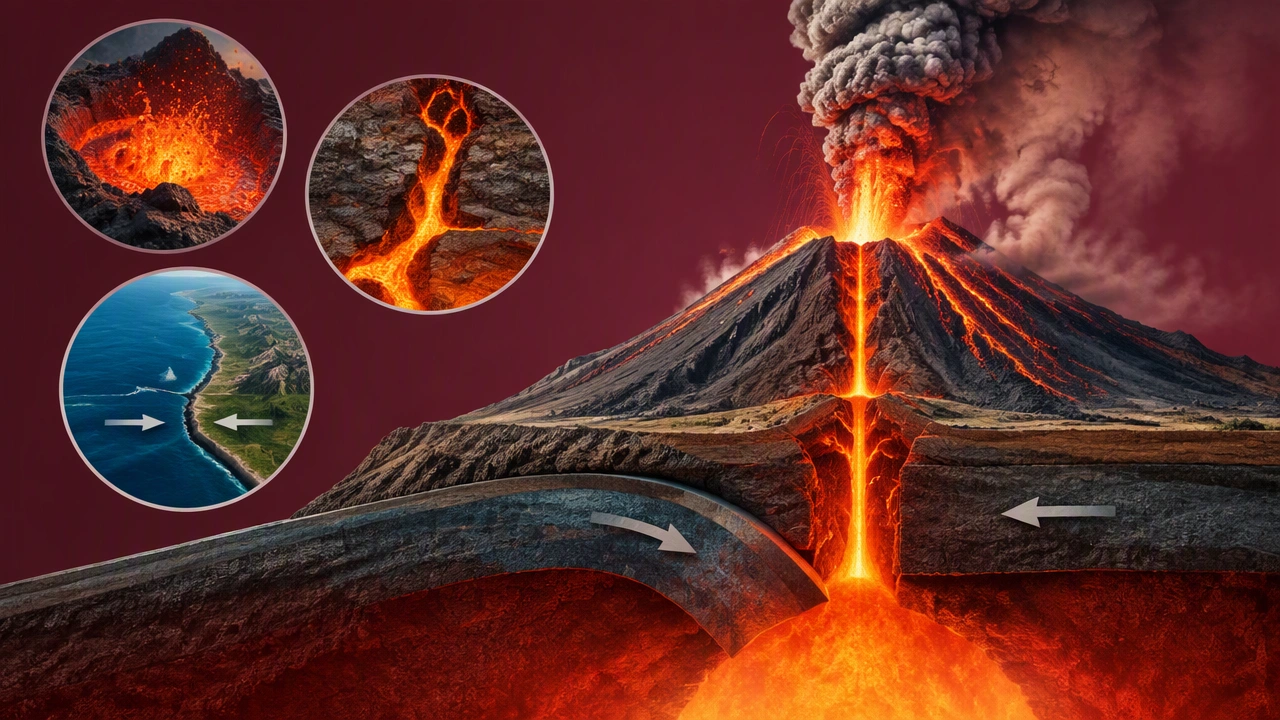
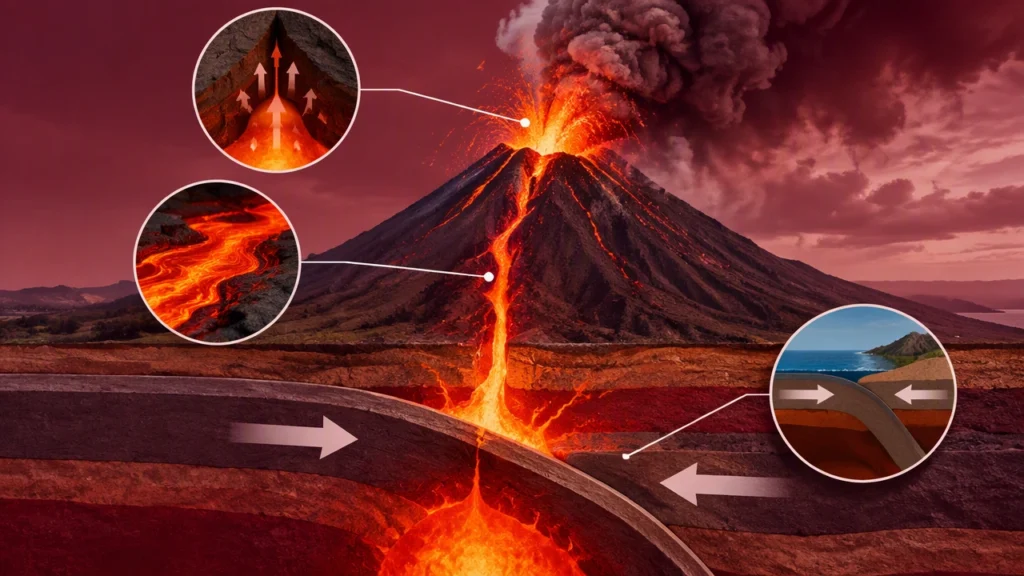
- Subduction zones: One plate dives beneath another. The sinking plate carries water-rich ocean crust downward. That water lowers the melting point of the mantle above the slab, helping magma form. The resulting magma often has more gas and can be thick, which favors pressure buildup and explosive eruptions.
- Mid-ocean ridges: Plates pull apart. Hot mantle rises to fill the gap and melts because the pressure drops. The magma here is usually runny and low in gas, so it tends to ooze out and create new seafloor with gentle eruptions.
- Hotspots: A narrow plume of extra-hot mantle rises under a plate. As the plate moves over the plume, a chain of volcanoes can form. Hawaii is a classic example, with fluid lava that flows far.
In each setting, the movement of plates either creates space for magma to rise, adds water to trigger melting, or both. Plate motion also stretches or squeezes the crust, opening or closing the cracks that magma uses as highways.
Why Some Eruptions Are Gentle and Others Are Explosive
The style of an eruption depends on how easily gas can escape. When magma is runny and has low gas content, bubbles can slip out as they form, leading to steady lava flows and quiet fountains. Think of syrup bubbling slowly on a stove. When magma is thick and gas rich, bubbles cannot escape easily. They merge, expand, and rip the magma apart into ash, pumice, and fast-moving clouds of hot gas and rock. This is like shaking a soda can and then opening it suddenly. The more gas that is trapped, and the thicker the magma, the more pressure can build before the rock gives way.
Signs That Pressure Is Rising
Volcanoes often give hints before they erupt. Small earthquakes increase as magma pushes upward and cracks rock. The ground may inflate like a slow-breathing chest as magma fills shallow storage. Gases such as sulfur dioxide may rise, giving a sharp smell near vents. Hot springs can change temperature or chemistry. Scientists watch these signals with seismometers, GPS, gas sensors, and satellite radar to track swelling. None of these signs guarantee a specific date or time, but together they help outline whether pressure is building, steadying, or relaxing.
Everyday Analogies That Make It Click
Pressure is the common thread in all eruptions. If you have ever microwaved a potato with its skin on, you know steam can build inside and burst through a weak spot. Magma works the same way, but with hotter, denser material and far more force. A clogged chimney also helps the picture: smoke and heat accumulate, and once the blockage clears, a rush of hot gas pours out. In a volcano, the blockage can be solidified lava or a plug of crystallized magma, and the rush can be a sudden explosion or a steady outpouring.
Putting It All Together
Volcanoes erupt because three ingredients meet in the same place: heat to make melt, pathways for that melt to rise, and pressure from expanding gas that wants out. Earth’s moving plates set the stage by creating those pathways and by adding ingredients like water that help rock melt. Pressure builds as magma accumulates or as gas comes out of solution. When the surrounding rock can no longer hold, the volcano opens a vent and releases energy. Some releases are slow and effusive, others are fast and explosive, but the core idea is always pressure finding a path to the surface.
Understanding this simple chain helps remove the mystery. You do not need complex equations to picture magma rising, gas bubbles expanding, and plates steering where new volcanoes can form. With those images in mind, why do volcanoes erupt explained simply becomes a story of heat, gas, and cracks, told in the everyday language of rising pressure and moving ground.